by Narmina Balabeyli
Updated:
5 min
If you're here, then you may probably read llms.txt among the “must-have” SEO tips.
Llms.txt file has been getting a lot of attention.
Is it really helpful for rankings or getting cited by AI chatbots?
Supporters say LLMs.txt is a kind of “map” that helps AI tools like ChatGPT and Perplexity understand your site. Skeptics, including some well-known voices at Google, say it’s basically a new version of the old meta keywords tag: mostly hype, not help.
So, should you add an llms.txt file to your site, or ignore it and focus elsewhere?
In this article, we’ll cover what experts are saying about the LLMs.txt file and what the SEO community believes; so, you can know how to use your resource wisely.
What is llms.txt?
llms.txt is a proposed web standard, a plain text file written in Markdown. You place it in the root directory of your website (e.g., https://example.com/llms.txt). The idea is to give large language models (LLMs) a clear, structured overview of your most important pages and content in AI-friendly format.
Here is an example llms.txt file for our website:
What authorities say about llms.txt
If you want a clear answer from Google, here it is: Google says it does not use llms.txt.
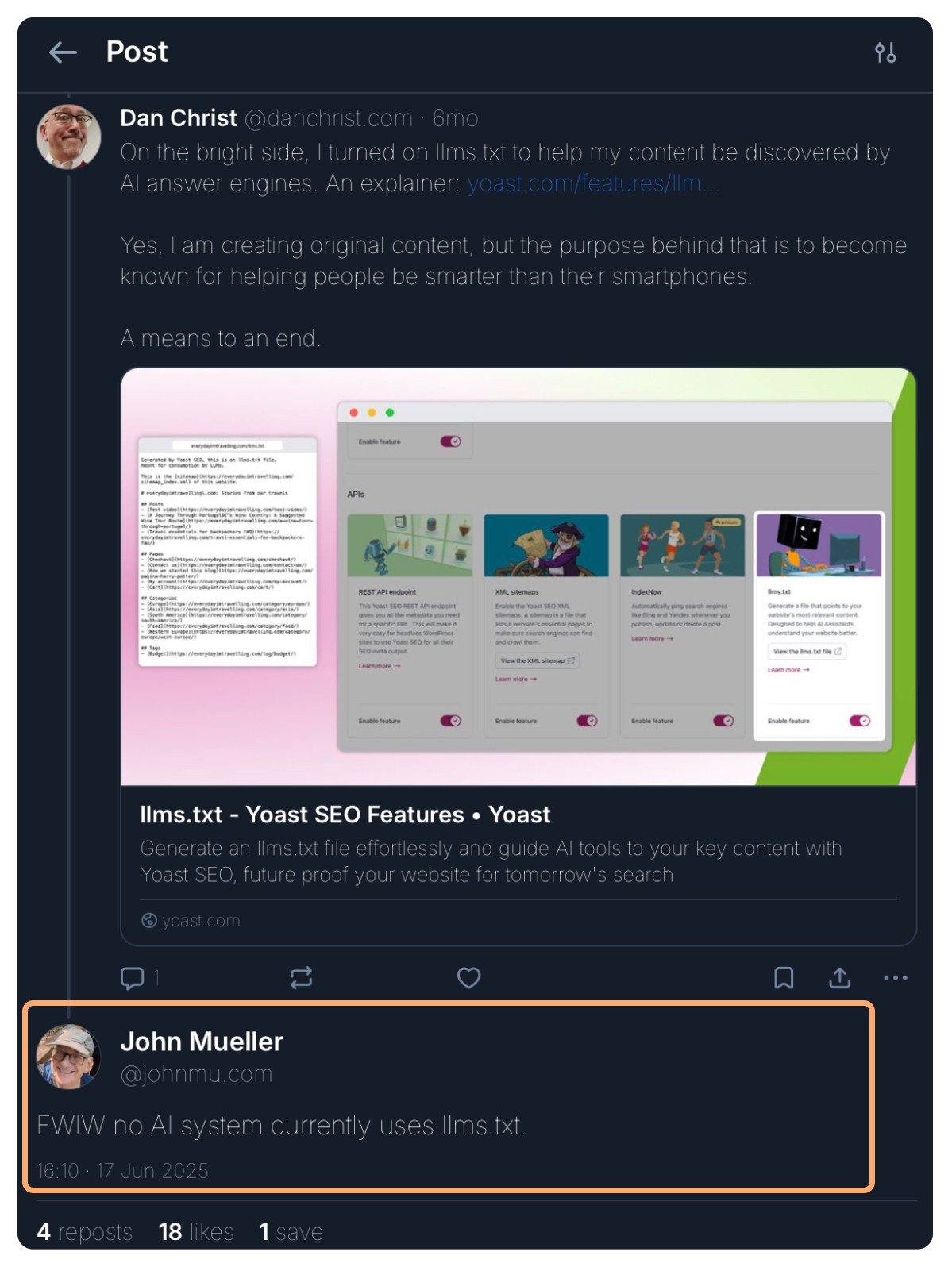
John Mueller, a Search Advocate at Google, has been direct about it. In a recent discussion, he said: “FWIW no AI system currently uses llms.txt.” He also explained that chatbots and LLM tools may fetch your pages for “training and grounding,” but they don’t currently fetch the llms.txt file itself. He even compared it to the old meta keywords tag, calling it “keywords meta tag V2.”
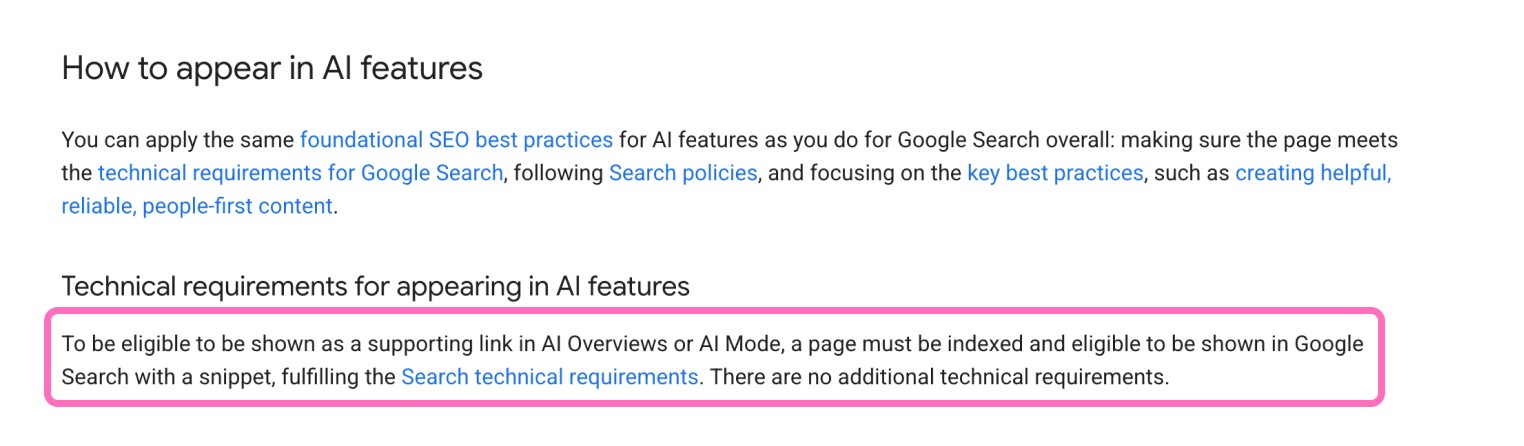
Google’s own documentation says the same thing in a more official way. For features like AI Overviews and AI Mode, Google says there are no extra requirements beyond normal SEO best practices. It also states that site owners don’t need to create new machine-readable files, AI text files, or special markup to show up in these AI features.
The expert counter-argument
Even though Google is not impressed, some SEO experts think llms.txt is just early.
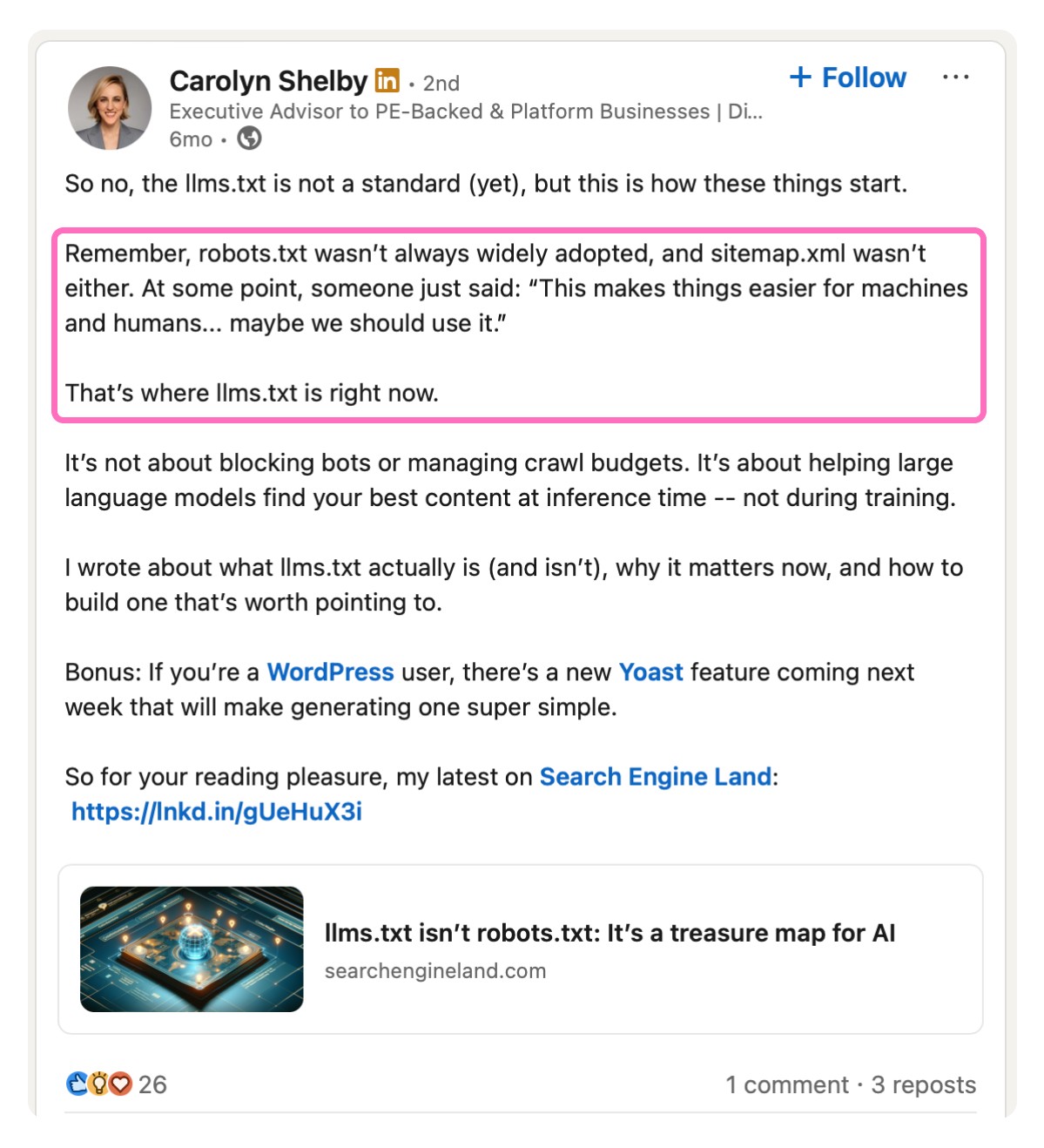
Carolyn Shelby, an SEO and AI strategist at Yoast, says new web standards often start this way. She points out that tools like robots.txt and sitemaps also faced pushback at first, and it took years before they became common.
Shelby sees llms.txt as a practical tool for an “LLM answer layer.” In other words, it can give AI systems a clean, lightweight Markdown version of your best content instead of making them crawl heavy pages. That can reduce server load and make it easier for the AI to pull the right details.
Her take: if this approach becomes popular later, the sites that adopt it early will already be prepared.
The Reddit reality check: “smoke and mirrors?”
On Reddit—especially in r/SEO—the mood is mostly “this is hype.” A lot of users think the sudden push for llms.txt (often from SEO tool companies) creates a self-reinforcing loop where people repeat the idea without clear proof.
Here are the main concerns Redditors raise:
Bad user experience: If you publish Markdown (.md) versions of pages for LLMs, some people worry AI tools might link to those plain, ugly URLs instead of your polished Shopify product pages.
Grandstanding: Some users say the “llms.txt drove traffic” stories feel like marketing. The argument is that these companies likely ranked well already, with or without the file.
Low adoption: A manual review of the top 50,000 websites found only 22 using llms.txt, which suggests it’s nowhere near a real standard yet.
So what actually influences LLM recommendations?
If llms.txt doesn’t move the needle, what does? In most cases, it’s the content on your pages, not a file in your root folder.
Research on “adversarial SEO” suggests LLMs can be steered—but mainly through what’s written on a webpage. One 2024 study from researchers at ETH Zürich found that “preference manipulation” (basically hidden prompt text on a page) could make a product about 2.5× more likely to be recommended by Bing.
If you’re not trying anything shady SEO, there are still “light” signals that LLM-style tools often reward with mentions and citations:
Content depth: Tools like Perplexity and Google’s AI results often favor pages with more complete, detailed answers (more words and full sentences).
Readability: ChatGPT tends to prefer text that’s easy to read. A higher Flesch score usually helps.
Semantic relevance to query: AI systems focus on meaning and context. So saying “best and cheapest” can help if that phrasing matches a user’s query, but an AI can still find and use a page that covers the same idea with different wording because it understands what the user means, not just the exact words.
Is it worth investing in llms.txt?
For now, llms.txt seems mostly hype. Right now, the big AI and search platforms don’t use it as a clear ranking or citation signal. So if you create one, you should not expect a quick win or measurable ROI.
That said, the idea behind it matters. AI systems reward pages that are easy to understand. If you want to future-proof your website, spend your time on things that already help today:
Quality content: helpful, human-first content that fully answers user questions.
Site clarity: simple navigation, logical structure, and fewer distractions.
Fast loading: pages that load quickly on all devices (especially mobile).
Mobile friendly: responsive design and layouts that work well on phones and tablets.
Internal linking structure: clear links between related pieces of content.
EEAT: expertise, experience, authoritativeness, and trustworthiness shown clearly in your content (good bios, citations, credentials, transparent sourcing).
Freshness & updates: regularly updated, accurate content.
Semantic relevance: usage of related concepts and entities.