by Narmina Balabeyli
Updated:
5 min
If you’re just starting to explore digital marketing, you’ll find that guest blogging is often recommended as a key strategy.
Unfortunately, guest posting is sometimes exploited and misused today, especially when the main motivation becomes acquiring backlinks alone.
Done well, it can help you reach new people and earn trust and expertise over time. Done poorly, it becomes a numbers game that helps no one.
In this post, you’ll learn what guest blogging should look like today, why it still works, and how to do it without common mistakes.
What is guest blogging?
Guest blogging, also known as guest posting, is publishing an article on someone else’s website.
The purposes of guest blogging can be different for each marketer:
link building,
driving referral traffic,
author name mention,
increasing a brand’s exposure and authority in the industry,
product placement and mention
As referred to by Ahrefs, according to Aira’s State of Link Building report, guest blogging is the third most popular link-building strategy. In the report, it's mentioned that 47% of surveyed SEO professionals favor guest blogging activities as their primary method.

Why should you invest in guest blogging?
Guest blogging is a powerful strategy to gain exposure, credibility, and other marketing opportunities when it’s done with the right intent.
Below are the most valuable benefits of guest blogging:
1. You reach new audience
When you guest post on another website, it helps you connect with a new audience and host website's exiting readership. Depending on the post type (educational, thought leadership, case study, or product-led content etc.), you can attract new prospects, increase brand awareness, earn followers, and drive qualified referral traffic to your website.
But, audience reach only happens if the site has real readers.
A high Domain Rating (DR) or domain authority doesn’t automatically mean the blog has strong traffic or engaged users. Some sites inflate authority without having a loyal audience.
Well.. do people actually read blog posts nowadays? Social Media Today say yes, 77% of internet users still read blogs.
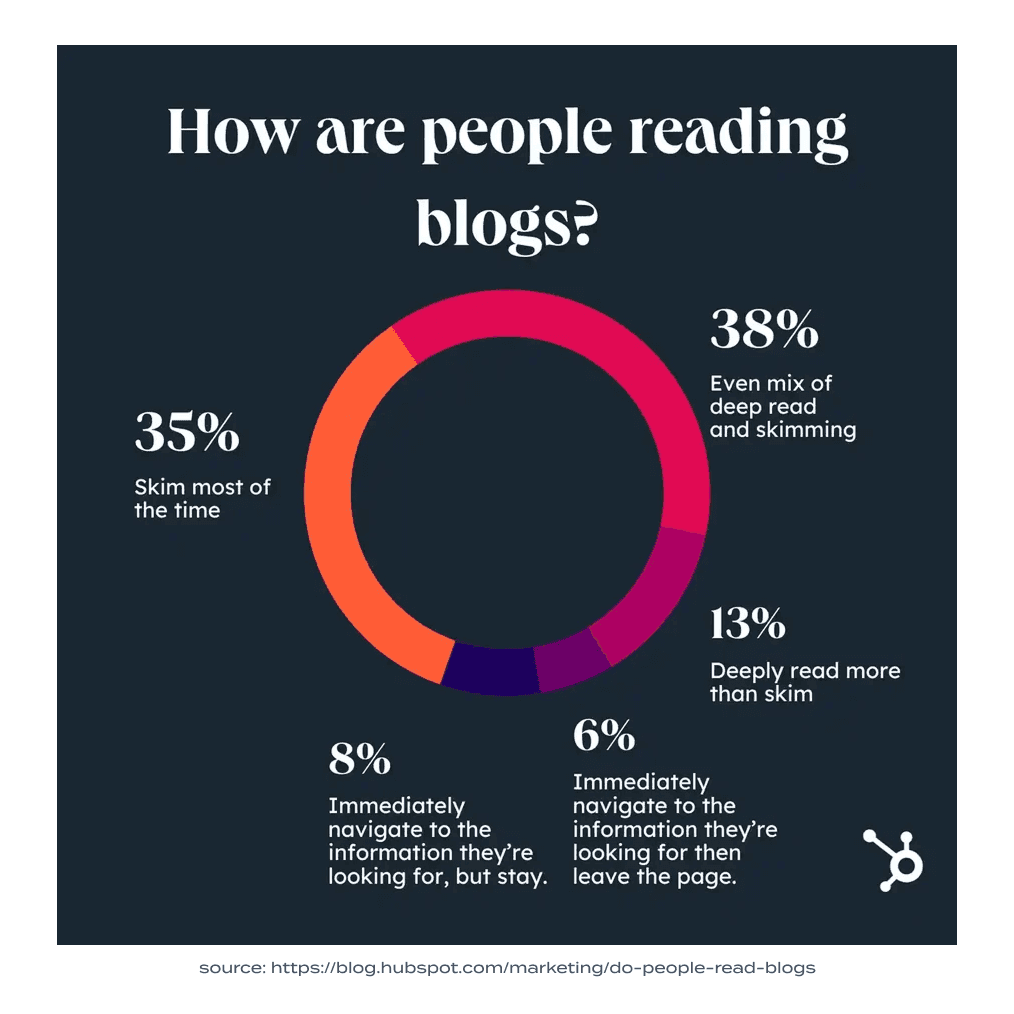
To avoid publishing on “empty” sites, evaluate the host website using real performance indicators, such as:
organic traffic trends (via Ahrefs/Semrush),
social shares and comments,
newsletter reach (if applicable),
and most importantly, Google Analytics data.
If you’re serious about guest blogging—not just doing it for the sake of it—and you want to see results, you can ask the site owner for key metrics such as monthly sessions, top traffic sources, and engagement performance for recent articles.
2. You build authority and industry expertise
Guest posting is one of the most effective ways to build credibility—especially when you consistently publish within your niche. Search engines and readers both pay attention to where your expertise appears online.
Publishing genuinely helpful content on reputable, relevant sites can build third-party credibility (mentions, recognition, trusted associations). Over time, this can improve how readers and search engines view your trustworthiness.
For example, if you sell car accessories, writing for automotive blogs or review sites helps people connect your brand with that space. Over time, you’re no longer “just a seller”—you’re seen as a knowledgeable source in the industry.
To make this benefit count:
Write content that demonstrates real experience (data, examples, processes, results).
Choose sites that are relevant to your niche—not generic publishing networks.
Make sure the host site includes a guest author bio with your name, role, and brand mention.
That author bio matters because it connects your expertise to your identity and business.
You earn backlinks (and strengthen your SEO)
A reputable hosting site can improve your website’s search engine ranking by providing a backlink.
One of the most well-known benefits of guest blogging is link building. A backlink from a reputable website can improve your SEO by passing authority and helping search engines trust your site more.
According to experts at Outreach Monks, approximately 65% of backlinks are obtained through guest posts. This highlights how common and effective this tactic can be when done properly.
If the “contribute content” part is done mainly to manipulate links/rankings (paid placements, scaled guest posts, optimized anchors), it can fall into link spam territory.
That said, guest posting should not be treated as a backlink shortcut. If your only goal is to collect links—or you rely on forced link exchanges—you risk:
publishing on low-quality sites,
getting irrelevant links that don’t help rankings,
and in some cases, triggering spam signals.
A better approach is: focus on creating content that deserves to be referenced, and place links only where they naturally improve the reader’s experience (e.g., citing a guide, study, tool, or resource).
You position your product or service in the right context
Guest blogging is not only about links, it’s also about association. Even when you don’t include a direct backlink, you can still improve how people (and search engines) connect your brand with specific topics.
Here’s how it works:
When your brand name or product is mentioned within content that contains related keywords and entities, it strengthens topical relevance and recall.
For example, if you sell leather wallets, your guest post works better when it covers related topics like full-grain vs. genuine leather, craftsmanship, durability, and basic care. If your brand appears in that same context, readers will connect you with leather wallets — and search engines may also better understand what your brand is associated with, even if the post doesn’t link to your store.
This is especially useful for branding because it builds recognition and credibility naturally, instead of forcing a sales pitch.
To do this effectively:
Mention your brand where it genuinely supports the topic.
Avoid promotional placement that feels unnatural.
Prioritize helpful content first, and product positioning second.
How to practice guest blogging in the right way?
Guest blogging can be challenging because it requires dedicated time and resources. If you're doing it, there's no middle way: do it right and see results, or don't do it at all.
Here are the usual steps to start guest blogging:
Step 1. Find related guest blogging opportunities
Finding guest blogging opportunities involves identifying websites that are open to hosting guest posts. However, that’s not all; the hosting websites you find should be relevant to your niche. Their domain rating should be reasonably high (ideally equal to or higher than yours), and most importantly, the site should have significant traffic and readership.
To find websites to write a guest post, you can perform search operations. For example, you can use search terms like “write for us” to find potential sites.
Step 2: Come up with the topics
Once you’ve identified websites that host guest posts, take a closer look at those sites. You should familiarize yourself with their existing blog posts. This way you can identify content gaps and find opportunities where your content can add value and interest their audience.
Step 3: Reach out to host websites
After developing a few topic ideas, reach out to the hosting website to pitch your concepts. Ideally, the websites that are open to hosting guest posts have contact forms or email addresses for inquiries.
Present your topic ideas and inquire about their guidelines (if they’re not publicly available). To make guest posting activities professional, create your guest post guidelines and share with them too.
Dedicate time to crafting your email to capture their attention.
Follow up as needed.
Ensure your email doesn’t end up in their spam folder.
Your email subject should be attention-grabbing and include content that the receiver can’t resist. Remember, they receive tons of similar emails. So, keep your email concise and to the point.
Use a tool to assess the likelihood of your email being marked as spam and an extension to check whether your email has been marked as spam or opened.
Step 4. Write the blog post
Upon receiving a positive response, decide on a deadline and communicate this with the hosting blog. Also, make sure to adhere to the host blog’s content guidelines, which may include rules about length, tone, topic, and formatting of the post.
This step is generally more straightforward. Focus on creating high-quality and informative content that provides value to the host blog’s audience, following their guidelines. These may include:
Preferred format for receiving the guest post (e.g., Google Doc, Word Doc)
The number of allowed backlinks
Image creation responsibilities and branding alignment
Quality checks
Keyword research and density requirements
Avoiding links to competitors
It’s also common to include a brief author bio, and sometimes a link back to your own website in the author bio.
Once you’ve completed the post, attach visuals (if applicable) and ensure the file, especially if it’s a Google Doc, is accessible. Then, you can send it to the host blog.
Step 5: Follow up the publication & promotion process
In this step, your main task is simply waiting for the email notification that says, “Your article is live!”
Once your guest post is published, make sure to check the posts, visuals, and inserted links, to confirm everything is fine. Also, verify that all the content is original and as agreed upon.
Next, fulfill any promises you and the hosting website are agreed upon. This might include sharing the post on your social media platforms or including it in your newsletter.
Step 7: Monitor continuously after the publication
An often overlooked aspect of guest blogging is continually checking if your content remains unaltered and if your links are still active.
You can use paid tools like Ahrefs to monitor and track any lost backlinks. Regular monitoring ensures that you maintain the benefits of your guest blogging efforts over time.